Showing posts sorted by relevance for query conflict. Sort by date Show all posts

Friday, June 14, 2013

Create conflict to hook readers

Conflict is an essential element in writing. It engages the reader. They want to see the conflict resolved. But what exactly is conflict? While a fight is a form of physical conflict it is the psychological, internal conflict that really engages readers. They become involved through the thoughts and actions of characters. Sometimes it causes readers to root for the reluctant hero who has low-self esteem. Or for the abused wife to find courage to get out of her situation. Today's prompt challenges you to show internal conflict.


Pumping Your Muse writing prompt:
Write a short scene or story that shows internal conflict and then resolve it.  It does not have to be something big or disastrous. We experience conflict in little ways everyday. Here are a few suggestions, if you're short on ideas.

  • Turmoil over making a doctor's appointment
  • Phone is ringing...should you answer?
  • Spot boyfriend/girlfriend with someone else
  • Reach for the toilet paper and the spool is empty or put on upsidedown
  • Those people over there are laughing...

Photo credit: cdedbdme

* * *

About The Inheritance by Donna Sundblad

Written within the allegorical tradition of classics like Pilgrim's Progress, The Inheritance offers a literal but symbolic story for today's fantasy enthusiasts. This cleverly devised tale doesn't tell you what to think, but stimulates thought as to why you believe what you believe in your own quest for the Eternal City. The Inheritance is an ideal discussion starter for youth groups, homeschoolers, and families who enjoy meaningful discussions. 


The Inheritance is available on Kindle, paperback on Amazon, Barnes & Noble, Kobo (Christian fiction), Smashwords and Google Books. When you read it, be sure to leave a review! Thanks for your support. 
 
Coming soon! Dragonborn by Donna Sundblad
Dragonborn conjures up a winning fantasy with dragons, humans, time travel, and magic. Follow the journey of the young prisonguard, Ervig Greenfields, as he seeks out dragons to remove a curse. The dragons offer him access to the Labyrinth of Times, which will purge the dark magic. But there’s a catch. Erving must take the Dragon Oath that requires allegiance--to fight alongside dragons for centuries, never to return to his own time. He and a handful of others take the selfless oath and become Dragonborn. The Dragonborn and their dragons become seeds of change, in this epic tale, of sacrifice for the greater good. Ride along with them as they slip through a tear in time to the past to change the future.

Tuesday, April 16, 2024

Civil War Writing Prompt: A Civilian's Perspective

(Updated October, 2026) 

Writing historical fiction can be both an educational and challenging endeavor—and an excellent way to spark your creativity.

Even if you don't write historical fiction, history can provide inspiration for stories in almost any genre. A real event, person, letter, or place can become the starting point for an entirely new story. You can take what you learn, embellish it, change the circumstances, and let history inspire your imagination.

For today's writing prompt, we're stepping into the Civil War era.

But we're not going onto the battlefield. Instead, this prompt asks you to look at war through the eyes of a civilian.

The soldiers aren't the only people affected by war. 

  • Families are separated
  • Homes are occupied
  • Possessions are lost
  • Communities are disrupted
  • Ordinary people are forced to make difficult choices

Your challenge is to write from the point of view of a civilian caught in the middle of the conflict.

You can use the historical situation below as your starting point, write from the perspective of the person who actually experienced it, or create an entirely fictional character, in a fictional world, living through similar circumstances.
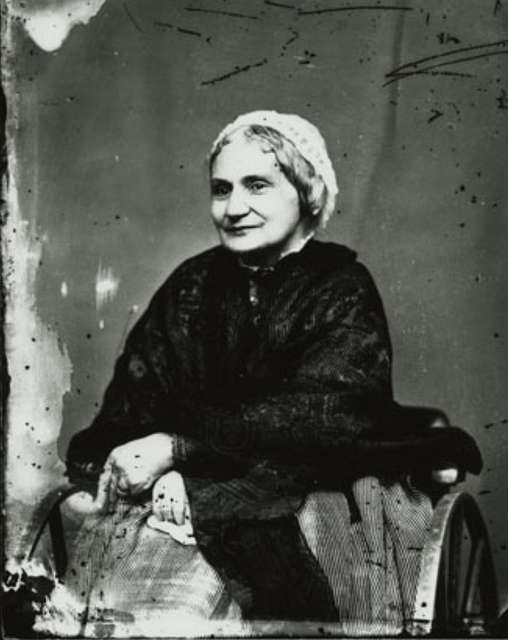
Mary Custis Lee in Old Age. Wearing a night cap and shawl, Mary Anna Randolph Custis Lee, the wife of Robert E. Lee, sits in a wheelchair in Lexington, Virginia, around 1868. This glass-plate image was made by local photographer Michael Miley.

Who, What, When, Where, and Why?

Who is writing the letter?

Mary Custis Lee, wife of Confederate General Robert E. Lee.

Mary Anna Randolph Custis Lee was born in 1806 and died in 1873. She and Robert E. Lee were married in 1831 and made their home at Arlington House in Virginia.

Who is the letter written to?

Union General Sanford.

When was it written?

May 30, 1861.

Why was it written?

Mary Custis Lee was writing to express her distress over the military occupation of her home, Arlington House, by Union troops.

Where does the story take place?

Arlington House in Virginia, the home of the Lee family.

Arlington House

The Historical Letter

Here is part of the surviving letter that inspired today's prompt:

30th May 1861

It never occurred to me Gen'l Sanford that I could be forced to sue for permission to enter my own house and that such an outrage as its military occupation to the exclusion of me and my children could ever have been perpetrated by anyone in the whole extent of this country.

I had been warned by an anxious friend that such a design was in contemplation nearly a month ago & advised to remove to a place of safety all my property that was of any value. Still incredulous I complied with his earnest entreaties in regard to the Mt. Vernon relics, plate, & pictures that we could never replace and after a visit of about 10 days to a friend in Fairfax was preparing…

The surviving words give us only part of the story. That's where your writer's imagination comes in. 

  • What happened before this letter was written?
  • What was Mary thinking when she learned that soldiers were occupying her home?
  • What did she fear losing?
  • What would it feel like to know that you could no longer simply walk through the door of your own house?
  • And what might happen next?  

 
Civil War Era Characters

Pumping Your Muse Writing Prompt

Imagine you are a civilian living during the (or a different) Civil War. Your home, or the home of someone you love, has been occupied by military forces. You cannot simply walk in and reclaim it.

Write the scene from the civilian's point of view.

You might write:

  • a letter to a military officer
  • a private letter to a family member
  • a diary entry
  • a conversation between family members
  • a scene in which the character approaches the occupied home
  • a fictional account of what happened immediately before or after the letter
  • or an entirely different story inspired by the historical circumstances

You don't have to write about Mary Custis Lee.

In fact, I challenge you to try creating your own character.

Perhaps she's a farmer's wife whose home has become a military post. Maybe she's a shopkeeper trying to keep her business open. Perhaps she's a child who doesn't understand why soldiers are sleeping in the house. Or maybe she's an older woman determined to protect a family heirloom.

The possibilities are as varied as the people who lived through the war.

Three Types of Conflict

Whatever story you choose to write, consider incorporating three levels of conflict.

1. External Conflict

What is happening outside your character?

Perhaps soldiers have arrived. The character has been displaced from her home. Food is becoming scarce. Travel is dangerous. Property is being confiscated. The character may have to navigate military orders or changing loyalties.

2. Interpersonal Conflict

How does the situation affect your character's relationships?

Conflict might arise between a husband and wife, parents and children, neighbors, friends, or even the protagonist and the military officer controlling the situation.

Perhaps the protagonist wants to leave while someone she loves refuses.

Perhaps two people disagree about whether to cooperate or resist.

Or perhaps someone the protagonist trusted has made a choice she cannot forgive.

3. Internal Conflict

What battle is taking place inside your protagonist?

This may be the most important conflict of all.

Your character may be frightened but determined not to show it. She may be angry but know that acting on that anger could endanger her family. She may feel helpless, guilty, betrayed, or torn between protecting herself and protecting someone else.

War doesn't only threaten a person's physical safety.

It can threaten their sense of home, identity, security, and control.

That's where internal conflict becomes especially powerful.

Think Beyond the Battlefield

When we think about Civil War stories, it's easy to picture soldiers, battles, uniforms, and weapons.

But war reaches far beyond the battlefield.

  • It enters kitchens and bedrooms.
  • It changes family relationships.
  • It empties farms.
  • It separates husbands from wives and parents from children.
  • It turns familiar roads into dangerous ones.
  • And sometimes it means that a person can no longer enter her own home.

Those quieter consequences of war can create some of the most compelling historical fiction.

So as you write, ask yourself:

What does war look like to someone who isn't carrying a weapon?

Research Your Setting

If you want to turn this prompt into a historical fiction scene, research can help bring it to life.

Look into:

  • Arlington House and its history during the Civil War
  • Civil War-era clothing
  • Women's daily lives during the 1860s
  • Civilian life in Virginia during the war
  • Military occupation of civilian homes
  • Transportation and communication during the period
  • Household furnishings and possessions
  • The treatment and preservation of family heirlooms

Historical details don't have to overwhelm your story. A few carefully chosen details can make a scene feel much more authentic. Start with what would your character sees when he/she opens a door?

And one more thing to note: The US Constitution, Third Amendment: “No Soldier shall, in time of peace be quartered in any house, without the consent of the Owner, nor in time of war, but in a manner to be prescribed by law.”

Sources: (Mary Custis Lee papers. Accession No. 0080-001)


Sunday, February 17, 2008

Conflict

Conflict comes in different packages. There's inner conflict and outer conflict...things you can do something about and things you cant. Create a scene where your character experiences inner conflict that can be resolved if they take action.

Wednesday, April 08, 2009

It's Not Funny


Today's prompt is an exercise in creating tension and building conflict through an unlikely agent: laughing.

Have you ever laughed because you were nervous or scared...or just at an inappropriate time? I remember collecting frogs for my biology teacher for extra credit. A friend and I waded around in the muck and I decided to climb into a tree to see if I could spot any frogs from the air. I pointed here and there while my friend sloshed around...and then it happened. She lost her balance and landed in that slimy water! What did I do? I laughed. The more I laughed the angrier my friend became. "It's not funny!" She screamed it, but the more she said it, the more I laughed, even though my brain told me she was right. It wasn't funny.

Pumping Your Muse Prompt

For today's prompt create a scene involving two to three main characters. One of those characters will laugh at an inappropriate time that causes others to react in a way that raises conflict and tension. If you feel a little stuck, here are a few scenario suggestions to pump your muse:

*Giving birth
*Attending church
*On the job
*Run out of gas
* * *

Check out my latest interview at Stories That Read You.And my 4 star review at Teens Read Too!

Wednesday, September 17, 2008

Routine and Backstory

 Backstory plays an important role in a story. It helps to understand the character: why they do what they do, how they think and how their past colors their present. It often lets us know a secret that can make a difference in the story.


Pumping Your Muse writing prompt

Write a scene SHOWING your character involved in everyday routine. Within the scene reveal at least one habit, quirk, and a thought of the past that shows inner conflict. Tie their present actions with what they're doing.   

Example: Your character starts the morning coffee brewing (habit), and puts a mug of water in the microwave to heat because they only drink coffee poured into a warmed mug (quirk). They go into the bathroom to brush their teeth and look into the mirror stirring memories. She thinks she looks much like her mother who spit coffee into her face as a child when it wasn't warm enough. Now she is preparing to take her elderly mother in and become her caregiver (conflict). This is just a sketch and leaves room for a much larger story, but it gives you an idea of how to use this prompt.

Hope you enjoy this prompt. Have fun with the creative process and keep on writing! Let me know if you have questions. Write whether you feel like it or not and you'll be pleasantly surprised. A little every day makes a big difference.

Photo credit:  pixabay

Thursday, May 15, 2008

Bloggers Unite For Human Rights


Today bloggers around the world are uniting for human rights. It's so easy to sit in the comfort of our homes and worry about gas prices, foreclosures and things that impact our personal lives while around the world defenseless people suffer. Even though gas prices hurt us, we still have choices to make--options. We can learn to cut back or even try to find a way to make some extra money. If we lose our home we can find another place to live, and while these are not easy solutions they are better alternatives than what many others face because we still have options. We're not facing genocide or lives as slaves, and our children have hope for the future and food to eat.

For today's writer's prompt we will take human rights issues from the news. What you do with it can work for fiction or not fiction. Don't forget that fiction can be a tool to help get the message across to the masses. In fact in my fantasy novel Windwalker the book burning scene was inspired history at a time when people had been stripped of their rights. The same oppression follows my characters in their quest for a better life.

Human Rights Prompts:
Unfortunately, there are plenty of human rights issues in the world to choose from. This is just a small sample plucked from around the world. While these issues can make for interesting fiction filled with conflict and tension as good battles evil, in real life the tension and conflict can often lead to hopelessness if people look the other way.

Thursday, February 05, 2009

The Unexpected

Today's prompt is inspired by the news. Did you hear the story about the man making his first skydive who found himself strapped to an instructor who died midair from a heart attack? Talk about the unexpected!


The skydiver drew from what experience he did have to survive: army training not to panic and what he learned from TV about pulling toggles to steer the parachute.

What can we take from this true story?

Fictional characters draw on past experience to make it through the unexpected.


Today's Writing Prompt: The Unexpected

Place your character in an everyday situation where things go wrong. This will be a "growing" experience. It stretches them beyond their original parameters and leaves them changed. It also creates conflict within the plot and draws a reader in to find out what happens next.

Choose one of the following situations (or one of your own), add an element of the unexpected and bring your character through it. Create the element of conflict and tension and bring it to resolution.

*First date
*Learning to drive
*Babysitting
*First day on the job
*Deep sea fishing

* * *


To support the author of this blog, Donna Sundblad, consider buying her books.

The Inheritance (Christian Fantasy)

Dragonborn (Epic Fantasy)


Wednesday, April 26, 2006

Shadows

Sometimes shadows offer shade, other times they might be mysterious or scary. Many times, they may misdirect. A character may see a shadow and think they are being followed, when in fact it is something else. Shadows are dark areas or shapes produced by something between rays of light and a surface. What that shadow portends depends on the writer. Whether it is something good or bad, shadows can be used to strike strike an emotion in the reader.


Light and shadow are devices used to create mood in writing. It's a way to engage your reader emotionally as people tend to respond to light or a lack of light in a feral way. Well lit areas are deemed safe, while dimly lit areas give people the creeps. Shadows bring with it a sense of sadness, gloom, or even an ominous feel promising something to dread.


Today's writing prompt

For today's writing prompt, introduce a shadow. If you don't know where to start, have a character spot a shadow twice. They think someone might be following them. Here's what you need to include:

  • Why do they think they are being followed? (Facts)
  • What do they think is the reason someone may be following them? (Backstory)
  • What do they do about it? (Plot)
  • Add conflict (this can be internal or external)
  • Resolve the conflict.
  • Reveal the shadow.


Wednesday, March 11, 2009

Enter the Unexpected


Have you started a story that you like, but don't know where to take it? Has your interesting character lost his/her flavor? Today's prompt is designed to help you get that story unstuck and infuse the plot with an unexpected element of conflict that will increase tension and the need to for resolution.


Today's Pumping Your Muse Prompt

Take an unfinished scene or short story that remains incomplete because you don't know what to do with it. Pump new life into it with the unexpected. Add one of the following unexpected elements and see where it takes you:

*Lost job
*Pregnancy
*Lost child
*Puppy
*Car wreck
*Death of a loved one

* * *

To support the author of this blog, Donna Sundblad, consider buying her books.

Pumping Your Muse (Creative writing book)
Windwalker (Fantasy) - Check out the latest 5 star review at Amazon
Beyond the Fifth Gate (Fantasy)

Thursday, January 15, 2009

Unprepared


Conflict is part of every good story. One way to introduce this element is to create a character who is unprepared for upcoming circumstances. It's a form of character flaw that makes room for the growth that will take place on the hero's journey. In fact, this is one of the ways many literary heroes are born. They're unprepared on the front end of the story which leads to failure in some sense...but this failure or flaw is the catalyst for growth. Most often it is the first step toward change and equips the hero with skills needed at the story's climax.

Pumping Your Muse Prompt:

For today's prompt, will play with the front end of this concept. Let's create a character who is unprepared. Here are a few prompts to get the ideas pumping. Just place your character in one of the following scenarios or choose one of your own:

*snowfall in a moderate climate
*bump into the "ex" who is with someone else
*accidentally locked in a small room (claustrophobic)
*pet goes missing
*coworker has a gun in the desk drawer
*car spins out on ice

* * *
To support the author of this blog, consider buying her books.
Pumping Your Muse (Creative writing book)
Windwalker (Fantasy)
Beyond the Fifth Gate (Fantasy)

Sunday, January 04, 2009

What Was Your Favorite Childhood Story?


What was your favorite childhood story?

I count myself lucky. My mother used to read to me. I know she tired of reading the same stories over and over, but I did have my favorites. Before I could read I had standard favorites including The Three Little Pigs, The Three Bears, The House that Jack Built, and Rose Red and Rose White. Nursery Rhymes (I don't know why they call them that with some of the gruesome content), painted all kinds of pictures. Spiders scaring young girls off their tuffets, little men claiming the first born if you couldn't guess their name, and a boy trying to drown a pussy cat in the well. Yet, these "poems" captivated me. Why? Because they told a story. And they left me thinking. For example, I always wondered how the fork felt when the dish ran away with the spoon.

Today's Pumping Your Muse Promp:Take your favorite childhood story or nursery rhyme. Ask yourself why you liked it, then ask what you can learn from it now. For example:

Ding dong bell
Pussy's in the well
Who put her in?
Little Johnny Flynn
Who pulled her out?
Little Tommy Stout
What a naughty boy was that
Try to drown poor Pussycat,
Who ne'er did any harm
But killed all the mice
In the Farmer's barn!


This poem offers conflict and resolution, good vs. evil, and a hero and a villian. It also creates an image in my mind. Doing a little more research, I learned this was written in the time of Shakespeare and the original version left the cat to drown in the well.

Once you can identify what you like about a written piece, it is easier to incorporate it in your own writing.

* * *
To support the author of this blog, consider buying her books.
Pumping Your Muse (Creative writing book)
Windwalker (Fantasy)
Beyond the Fifth Gate (Fantasy)

Sunday, October 12, 2008

Buried Alive with a Twist


We've all read or seen those horror scenes when someone is buried alive. Think of the terror, the helplessness...and then the hero. We certainly can't leave our character in that situation, though we can use all that conflict and suspense to build the story.

Today's Pumping Your Muse Prompt:

First, make a list of emotions and physical symptoms brought about by being buried alive.

For today's prompt I want you to take those same feelings and symptoms evoked by the thought of being buried alive and carry them into an urban scene, to a character who is buried in circumstances that are overwhelming. They're so stressed they can hardly breathe. Here are a few ideas to get your scene up and running:

*buried in work
*buried in bills
*buried in responsibilities of motherhood, wife and caregiver to elderly parents
*buried in depression
*and if you want to actually bury someone for real: buried in rubble from a natural disaster

Once you've found your idea, think of a way out. Create a hero.

Now write the first draft of your short story!

Wednesday, October 22, 2008

Melting a Hardened Heart


Continuing on the agent of change theme, today's prompt will melt a hard heart. Not an easy task in many cases. You can pick the hardened heart from the following list or one of your own:

*Divorced woman who caught her husband cheating repeatedly
*A young man who grew up in an abusive home
*Ex-con who was innocent but paid his time
*Person living in poverty without hope

Pumping Your Muse Prompt:

Now you have an idea of the heart you're going to be dealing with in this scene. The truth is, that each of these people want to hope, want to dream, and want to be part of a relationship. Bring in an agent of change that starts to melt that heart and renew the hope that once burned there.

Ideas for Agent's of Change:

*a pet
*an abandoned baby
*a child in the park offering a hand-picked wild-flower
*a stranger who treats them kindly with no strings attached

Be sure to include elements of tension and internal conflict within your protagonist and then bring it to resolution.

* * *

If you enjoy prompts, check out Pumping Your Muse. The prompts included in this creative writing book challenge the imagination to take new direction and if followed to the conclusion of the book, provide a detailed outline along with completed scenes and developed characters for one novel, as well as a solid start for a second novel.

Tuesday, December 23, 2008

Don't Go There


How often have you read a book or watched a movie where a character heads into the dark cellar, up to the rooftop, or steps outside to check out a noise and your mind screams, DON'T GO THERE. If that has happened to you, then the writer has done their job. They've laid the groundwork to create that tension and conflict. Today's prompt will help you practice those skills.

Today's Pumping Your Muse Prompt:

Create a scene involving risk. If you don't have an idea, use one of the following story prompts:

*Character peers through a crack in the curtains
*Door banging in the wind
*First babysitting job
*Meeting a blind date
*Look for missing pet
*Running from one bad situation into another
* * *
To support the author of this blog, consider buying her books.
Pumping Your Muse (Creative writing book)
Windwalker (Fantasy)
For more about the author of this blog check out Theinkslinger.net.


Tuesday, August 05, 2008

Name Your Poison


Murder is a popular plot thread that hooks the reader if written well. Research is part of the writing process if you want to create believable details when it comes to murder by poison. Poison makes for interesting reading because it can be easily slipped into an unsuspecting victim's food or drink. It can act slowly building tension, conflict and hope for discovery, or quickly while imitating a medical condition or event which leads the physician to misdiagnose the cause of death.

Poisons can be found in multiple sources. For today's prompt we'll look at poisons from plant sources. Unless the doctor in your story is suspicions and orders an autopsy with a drug screen, most likely your murderer will go free.

Research will help you find the right poison. To make your story believable you'll have to know how the poison affects the body. Research herbal poisons, research the following databases and choose a poison. Based on the information you find, develop a short scene.

Here are some links to help you find what you need to know:

*University of Florida Herbarium Library
*FDA Poisonous Plant Database
*Guide to Poisonous Plants
*Toxic Plants